



























What Is a Hybrid Solar Eclipse? A Simple Guide to the Rarest Type of Eclipse
Discover what is a hybrid solar eclipse in this easy-to-understand guide. Learn how it forms, why it is so rare, and what makes it different from total and annular eclipses.

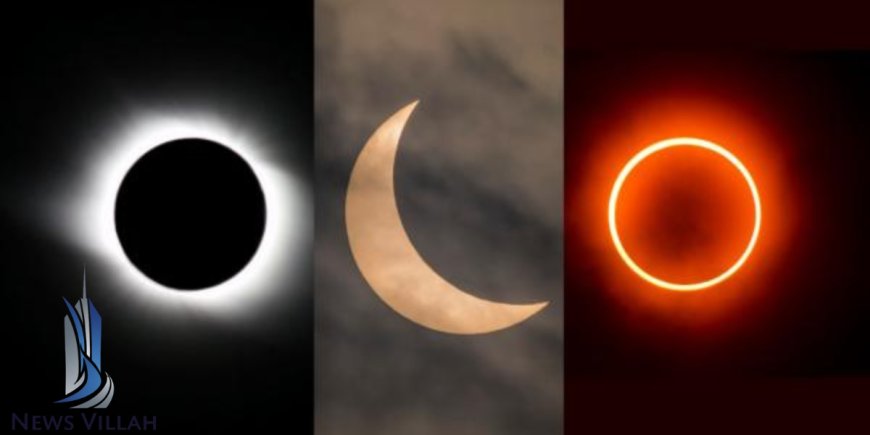
Table of Contents
- Preface
- Understanding Solar Eclipses First
- What Is a Hybrid Solar Eclipse? (Simple Definition)
- Why Does a Hybrid Solar Eclipse Happen?
- Why Are Hybrid Solar Eclipses So Rare?
- How Does a Hybrid Solar Eclipse Look?
- The Path of a Hybrid Solar Eclipse
- Famous Hybrid Solar Eclipses in History
- How Often Do Hybrid Solar Eclipses Occur?
- Why Do Scientists Study Hybrid Solar Eclipses?
- Is It Safe to Watch a Hybrid Solar Eclipse?
- How Is a Hybrid Solar Eclipse Different From Other Eclipses?
- Why Are People So Fascinated by Hybrid Solar Eclipses?
- The Role of Earth’s Curvature
- Will We See More Hybrid Solar Eclipses in the Future?
- Final Thoughts: What Is a Hybrid Solar Eclipse?
-
Preface
A solar eclipse is always an awe-inspiring event, but among all types of eclipses, one stands out as the rarest and most mysterious: the hybrid solar eclipse. Many people search online asking what is a hybrid solar eclipse, because it sounds unusual and intriguing. In this in-depth guide, we will explain in clear, simple language what is a hybrid solar eclipse, how it happens, why it is so rare, and why it fascinates scientists and skywatchers around the world.
This article is written in an educational, safe, and fact-based way so that it meets high content quality standards and remains friendly for readers and search engines alike.
-
Understanding Solar Eclipses First
Before we fully answer what is a hybrid solar eclipse, it helps to understand what a solar eclipse is in general.
A solar eclipse occurs when the Moon passes between the Earth and the Sun, blocking some or all of the Sun’s light. This alignment can only happen during a new moon, when the Moon and Sun are in the same part of the sky.
There are three main types of solar eclipses:
-
Total solar eclipse – The Moon completely covers the Sun.
-
Annular solar eclipse – The Moon covers the center of the Sun, leaving a bright ring.
-
Partial solar eclipse – Only part of the Sun is covered.
So, where does the hybrid solar eclipse fit in? To understand what is a hybrid solar eclipse, we must look at how these types can blend together.
-
-
What Is a Hybrid Solar Eclipse? (Simple Definition)
So, what is a hybrid solar eclipse?
A hybrid solar eclipse is a rare type of eclipse that appears as a total solar eclipse in some parts of the Earth and as an annular solar eclipse in other parts along the same eclipse path.
In simpler words, what is a hybrid solar eclipse? It is an eclipse that changes its type depending on where you are on Earth.
Some people will see the Sun completely covered (total eclipse), while others will see a bright ring around the Sun (annular eclipse), all during the same celestial event.
This makes it one of the rarest and most fascinating types of solar eclipses.
-
Why Does a Hybrid Solar Eclipse Happen?
To understand what is a hybrid solar eclipse, we need to know how the Moon’s distance affects eclipses.
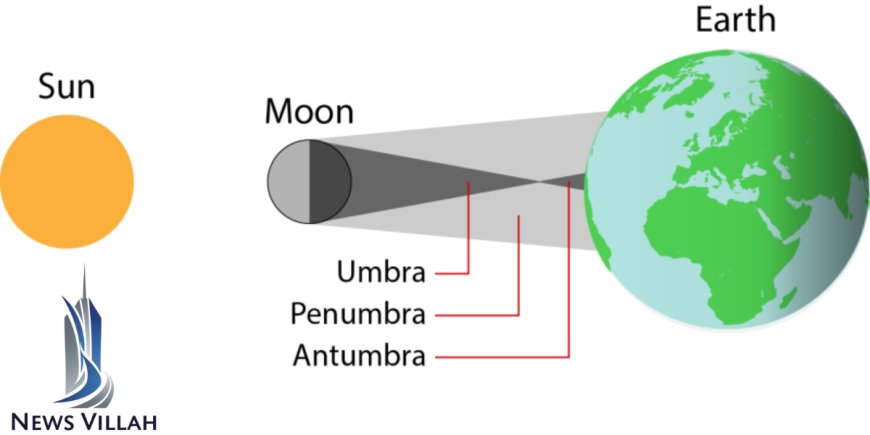
The Moon does not orbit Earth in a perfect circle. Sometimes it is closer to Earth, and sometimes it is farther away. This changes how large the Moon appears in the sky.
-
When the Moon looks larger, it can completely block the Sun, causing a total eclipse.
-
When the Moon looks smaller, it cannot fully cover the Sun, creating an annular eclipse.
A hybrid solar eclipse happens when the Moon’s distance is just right — right on the edge between being big enough for a total eclipse and too small for full coverage.
Because the Earth is curved, observers at different locations see slightly different distances between the Moon and the Earth. That is why the eclipse can appear total in one place and annular in another.
This is the key to understanding what is a hybrid solar eclipse.
-
-
Why Are Hybrid Solar Eclipses So Rare?
One of the main reasons people ask what is a hybrid solar eclipse is because it is extremely uncommon.
Out of all solar eclipses, only about 5% are hybrid eclipses. Some decades may pass without a single hybrid eclipse occurring.
This rarity happens because everything has to line up perfectly:
-
The Moon must be at just the right distance from Earth.
-
The Earth must be positioned so that curvature changes how the eclipse is seen.
-
The alignment must be extremely precise.
Because of these strict conditions, hybrid solar eclipses are truly special.
-
-
How Does a Hybrid Solar Eclipse Look?
When someone experiences a hybrid solar eclipse, what they see depends on where they are located.
If you are in one part of the eclipse path, you may see a total solar eclipse, where the Sun disappears and the sky darkens. Stars may even become visible.
If you are in another part of the same eclipse path, you will see an annular eclipse, where a bright ring of sunlight surrounds the Moon.
This dual nature is what defines what is a hybrid solar eclipse.
-
The Path of a Hybrid Solar Eclipse
Every solar eclipse has a path — the area on Earth where it can be seen.
For a hybrid eclipse:
-
The path usually begins as annular.
-
Then it becomes total.
-
Then it may become annular again.
This change along the path is another reason why what is a-hybrid solar eclipse is such an interesting question for astronomers.
-
-
Famous Hybrid Solar Eclipses in History
What is a Hybrid Solar Eclipse There have been several hybrid solar eclipses in recorded history. One famous example occurred on April 20, 2023. This eclipse was seen as total in some regions and annular in others, making it a true hybrid eclipse.
Events like this help scientists study the Sun, the Moon, and Earth’s atmosphere.
Understanding what is a hybrid solar eclipse allows us to appreciate how rare and valuable these events are for science.
-
How Often Do Hybrid Solar Eclipses Occur?
Hybrid solar eclipses do not happen every year. Sometimes there may be one in a decade, and sometimes none at all.
On average, a hybrid eclipse happens only a few times per century.
This extreme rarity is another reason why so many people want to know what is a hybrid solar eclipse.
-
Why Do Scientists Study Hybrid Solar Eclipses?
Hybrid solar eclipses are important because they allow scientists to observe the Sun’s corona — the outer atmosphere of the Sun — in unique ways.
When the Sun is completely blocked during the total phase, scientists can study solar flares, solar winds, and magnetic fields.
Learning what is a hybrid solar eclipse helps us understand how the Sun affects Earth, satellites, and even climate.
-
Is It Safe to Watch a Hybrid Solar Eclipse?
Just like any other solar eclipse, looking directly at the Sun without protection is dangerous.
Even during a hybrid solar eclipse, you should use:
-
Eclipse glasses
-
Solar filters
-
Indirect viewing methods
Never look at the Sun directly unless it is during the total phase of a total eclipse, and even then only when it is completely covered.
Knowing what is a hybrid solar eclipse includes understanding how to view it safely.
-
-
How Is a Hybrid Solar Eclipse Different From Other Eclipses?
To summarize what is a hybrid solar eclipse, here is how it compares:
Type
What You See
Total
Sun fully covered
Annular
Ring of light
Partial
Sun partly covered
Hybrid
Total in some places, annular in others
This unique combination is what makes the hybrid eclipse so special.
-
Why Are People So Fascinated by Hybrid Solar Eclipses?
The idea that the same eclipse can look different depending on where you stand makes people curious. That curiosity leads many to search online asking what is a hybrid-solar-eclipse.
It also reminds us that we live on a moving, curved planet in a vast and dynamic universe.
-
The Role of Earth’s Curvature
Earth’s round shape is a key factor in explaining what is a hybrid solar eclipse.
Because Earth is curved, people at different points on the surface see the Moon at slightly different distances. This small difference is enough to change the type of eclipse seen.
Without Earth’s curvature, hybrid solar eclipses would not exist.
-
Will We See More Hybrid Solar Eclipses in the Future?
Yes, but they will always remain rare. Astronomers can predict them many years in advance, allowing scientists and skywatchers to prepare.
Understanding what is a hybrid solar-eclipse makes it easier to appreciate these predictions and their importance.
-
Final Thoughts: What Is a Hybrid Solar Eclipse?
So, what is a hybrid solar eclipse?
It is a rare and remarkable solar eclipse that appears as both a total and an annular eclipse, depending on where you observe it from on Earth. It happens because of the Moon’s changing distance and the Earth’s curved surface.
Hybrid solar eclipses are rare, beautiful, scientifically valuable, and a reminder of how perfectly balanced our cosmic system is.
Now that you understand what is a-hybrid solar eclipse, you can truly appreciate why it is called the rarest type of solar eclipse and why it continues to amaze people around the world.
What's Your Reaction?
 Like
0
Like
0
 Dislike
0
Dislike
0
 Love
1
Love
1
 Funny
0
Funny
0
 Angry
0
Angry
0
 Sad
0
Sad
0
 Wow
0
Wow
0