




























What Is Fort Ticonderoga? History, Battles, and Why It Matters Today
Discover what is Fort Ticonderoga, its key battles in the French and Indian War and the American Revolution, and why this historic New York fortress still matters today.

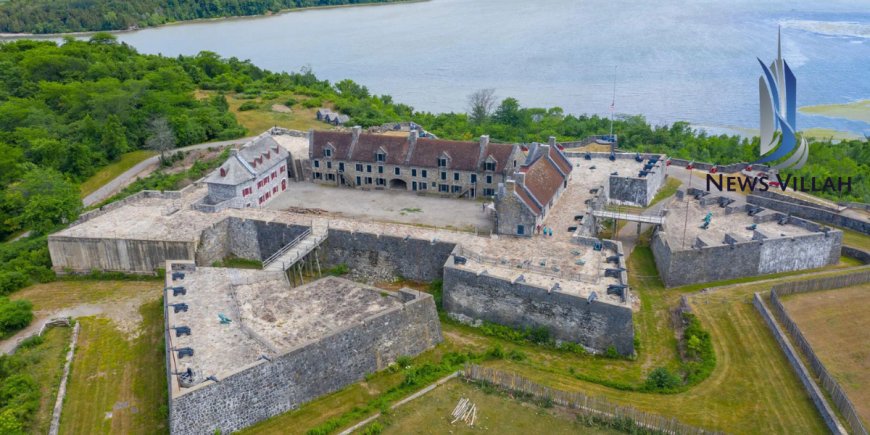
Table of Contents
- Preface
- The Geographic Significance of Fort Ticonderoga
- Origins: The French Construction (1755–1757)
- The French and Indian War
- British Capture and Renaming (1759)
- Role in the American Revolutionary War
- Henry Knox and the “Noble Train of Artillery”
- British Recapture (1777)
- Decline and Abandonment
- Restoration and Preservation
- Architectural Features
- A Living History Museum
- Why Fort Ticonderoga Matters Today
- Tourism and Cultural Impact
- Archaeological Discoveries
- Connections to the Battle of Saratoga
- The Role of Indigenous Nations
- Preservation Challenges
- Visiting Fort Ticonderoga Today
- Frequently Asked Question: What Is Fort Ticonderoga?
- Conclusion
-
Preface
If you’ve ever explored early American history, you may have come across the question: what is Fort Ticonderoga? Located in upstate New York near Lake Champlain, this historic military site played a crucial role in the French and Indian War and the American Revolutionary War. Today, it stands not only as a preserved landmark but also as a powerful symbol of strategic military innovation and national identity.
In this comprehensive guide, we will answer what is Fort Ticonderoga, examine its origins, explore the major battles fought there, and explain why it continues to matter in modern America.
-
The Geographic Significance of Fort Ticonderoga
To truly understand what is Fort Ticonderoga, we must first look at its location. The fort sits at a strategic point between Lake George and Lake Champlain. This narrow corridor once served as a critical transportation and military route connecting Canada and the Hudson River Valley.
In the 18th century, controlling this waterway meant controlling access between British-controlled Canada and the American colonies. Because of this geography, the site became a focal point for military conflict.
-
Origins: The French Construction (1755–1757)
When asking what is Fort Ticonderoga, its origins are key.
The fort was originally built by the French during the French and Indian War (1754–1763). They named it Fort Carillon. Designed in a star-shaped pattern typical of European military engineering, the fort featured thick stone walls, bastions, and defensive earthworks.
The French chose the location specifically to block British forces advancing north from the Hudson River.
-
The French and Indian War
One of the earliest major events in answering what is Fort Ticonderoga involves the Battle of Carillon in 1758.
The Battle of Carillon (1758)
In July 1758, British General James Abercrombie led nearly 16,000 troops against a much smaller French force of about 3,600 soldiers commanded by General Montcalm.
Despite being heavily outnumbered, the French successfully defended the fort due to:
-
Strong fortifications
-
Strategic positioning
-
British tactical errors
The British suffered significant casualties, making it one of the bloodiest battles of the war.
-
-
British Capture and Renaming (1759)
In 1759, the British returned under General Jeffrey Amherst. This time, the French abandoned the fort rather than face another siege.
After capturing it, the British renamed it Fort Ticonderoga, derived from an Iroquois word often translated as “it is at the junction of two waterways.”
At this stage, the answer to what is Fort Ticonderoga shifted—it was now a British stronghold guarding the northern frontier.
-
Role in the American Revolutionary War
For many Americans, the most important chapter in understanding what is Fort Ticonderoga begins in 1775.
The Surprise Capture (May 1775)
Early in the Revolutionary War, colonial forces recognized the strategic importance of the fort. Ethan Allen and Benedict Arnold led a surprise attack on May 10, 1775.
The British garrison was small and unprepared. The Americans captured the fort without firing a shot.
This victory was symbolically powerful and provided the Continental Army with much-needed artillery.
-
Henry Knox and the “Noble Train of Artillery”
One of the most fascinating stories connected to what is Fort Ticonderoga involves Henry Knox.
After capturing the fort, the Americans transported heavy cannons over 300 miles through snow and rugged terrain to Boston. This mission, known as the “Noble Train of Artillery,” forced British troops to evacuate Boston in 1776.
Without the artillery from Fort Ticonderoga, this early American victory might not have been possible.
-
British Recapture (1777)
The fort changed hands again in 1777 during the Saratoga Campaign.
British General John Burgoyne advanced south from Canada and positioned artillery on nearby Mount Defiance. This elevated position overlooked the fort and made American defenses vulnerable.
Recognizing the disadvantage, American forces withdrew. The British briefly regained control.
This episode highlights the evolving military understanding of terrain and strategy—another key part of answering what is Fort Ticonderoga.
-
Decline and Abandonment
After 1781, the fort lost its military importance. It fell into disrepair and was eventually abandoned.
For decades, it remained largely neglected, with its walls slowly deteriorating.
Yet even in ruin, the site retained historical significance.
-
Restoration and Preservation
In the early 20th century, private efforts began restoring the fort. The Pell family, who owned the property, undertook major reconstruction projects starting in 1909.
Today, Fort Ticonderoga is a meticulously preserved historical site and museum.
When people ask what is Fort Ticonderoga today, the answer includes both its past military role and its modern educational mission.
-
Architectural Features
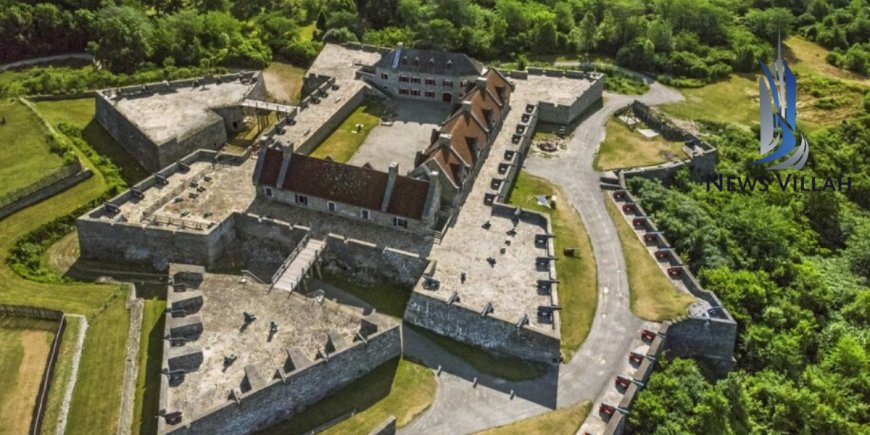
What is Fort Ticonderoga Understanding the structure helps clarify what is Fort Ticonderoga from a design perspective.
Key features include:
-
Star-shaped layout
-
Thick limestone walls
-
Bastions at each corner
-
Defensive trenches and ramparts
This European-style fortification was designed to withstand artillery attacks common in 18th-century warfare.
-
-
A Living History Museum
Modern visitors experience more than just stone walls.
Fort Ticonderoga operates as a living history museum with:
-
Historical reenactments
-
Musket demonstrations
-
Educational programs
-
Guided tours
These interactive experiences help bring the past to life.
In this way, what is Fort Ticonderoga extends beyond history books—it becomes an immersive educational environment.
-
-
Why Fort Ticonderoga Matters Today
The importance of the fort goes far beyond its battlefield history.
1. Military Innovation
The fort demonstrates how military engineering evolved during the 18th century.
2. Strategic Geography
Its location teaches valuable lessons about how terrain influences warfare.
3. Revolutionary Symbolism
The 1775 capture symbolizes early American determination and unity.
4. Educational Resource
Today, the fort serves as a research center and museum for scholars and students.
When reflecting on what is Fort Ticonderoga, its modern relevance is just as significant as its historical battles.
-
Tourism and Cultural Impact
Fort Ticonderoga attracts thousands of visitors annually.
Tourists explore:
-
Museum exhibits
-
Gardens
-
Boat tours on Lake Champlain
-
Seasonal events
The site contributes to regional tourism and local economic development.
-
-
Archaeological Discoveries
Ongoing archaeological work continues to uncover artifacts, including:
-
Musket balls
-
Uniform buttons
-
Ceramics
-
Military tools
These discoveries deepen our understanding of daily life within the fort.
Each new finding adds context to the broader question of what is Fort Ticonderoga.
-
-
Connections to the Battle of Saratoga
The 1777 British campaign that included Fort Ticonderoga ultimately led to the Battle of Saratoga—considered a turning point in the Revolutionary War.
The American victory at Saratoga convinced France to support the colonies.
Thus, events connected to Fort Ticonderoga indirectly influenced international alliances.
-
The Role of Indigenous Nations
Before European arrival, the region surrounding the fort was inhabited by Indigenous peoples, including the Iroquois Confederacy.
Understanding what is Fort Ticonderoga also requires acknowledging this earlier history and the complex alliances during colonial conflicts.
-
Preservation Challenges
Maintaining an 18th-century stone fortress is not easy.
Challenges include:
-
Weather damage
-
Structural aging
-
Funding for restoration
Ongoing conservation efforts ensure future generations can continue learning from this historic site.
-
-
Visiting Fort Ticonderoga Today
If you visit today, you’ll find:
-
A restored fort interior
-
Educational workshops
-
Scenic views of Lake Champlain
-
Detailed historical exhibits
The experience blends scenic beauty with historical depth.
-
-
Frequently Asked Question: What Is Fort Ticonderoga?
So, what is Fort Ticonderoga in summary?
It is:
-
A former French and British military fort
-
A Revolutionary War stronghold
-
The site of multiple significant battles
-
A preserved historic landmark
-
An educational and cultural institution
Its legacy continues to shape American historical understanding.
-
-
Conclusion
Answering what is Fort Ticonderoga requires looking at more than just stone walls or battlefield maps. It is a site where global empires clashed, where American revolutionaries found early success, and where military strategy evolved dramatically.
From its French origins as Fort Carillon to its critical role in the Revolutionary War, Fort Ticonderoga has stood at the crossroads of history. Today, it remains a testament to resilience, strategy, and the enduring importance of preserving the past.
By understanding what is Fort Ticonderoga, we gain deeper insight into the foundations of American independence and the ongoing value of historical education.
Whether viewed as a battlefield, a museum, or a symbol of national heritage, Fort Ticonderoga continues to matter—both in history and in the present day.
What's Your Reaction?
 Like
0
Like
0
 Dislike
0
Dislike
0
 Love
0
Love
0
 Funny
0
Funny
0
 Angry
0
Angry
0
 Sad
0
Sad
0
 Wow
0
Wow
0